
Gadsden Treaty
Most Mexicans and many Americans believe that Mexico was bullied by the US into selling the land that became the Gadsden Purchase in June, 1854. This is NOT true.
The Treaty of Guadalupe Hidalgo ended the Mexican American War of 1846-48. The new boundary line between the US and Mexico could not be determined west of the Rio Grande River because the negotiators used a map – the Disturnell map – which had major errors. The map showed the Rio Grande in the location of the Pecos River and the town of El Paso near the present day location of Carlsbad, New Mexico – about one hundred miles east and thirty five miles north of El Paso’s actual location.(2)
Although the boundary commissions from Mexico and the US attempted to resolve the impasse, it was determined that the issue had to be settled by negotiations between the US and Mexican governments.
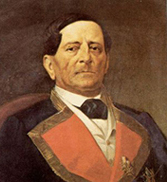
Santa Anna became president of Mexico for the 11th time on 20 April 1853. He promptly declared himself dictator-for-life with the title “Most Serene Highness” and abolished freedom of the press. James Gadsden was appointed to represent the US in negotiations with Mexico and he first met Santa Anna on Aug 17, 1853.(3)
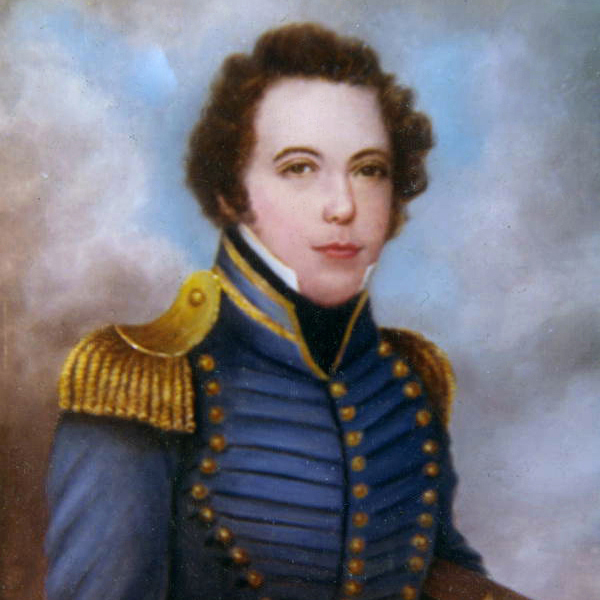
On September 25, 1853 — James Gadsden and Antonio de Santa Anna opened negotiations. It was agreed that the land called the Mesilla Valley – about 6,100 square miles along with surrounding areas – would be a neutral zone between Mexico and the US, not belonging to either nation pending outcome of negotiations.(4)
Gadsden quickly realized that Santa Anna was desperate for money and was more than willing to sell the US land as long as the amount of money received was sufficient to alleviate the financial predicament Santa Anna was in. Already two rebellions over the summer of 1853 had been put down. Gadsden believed that Santa Anna would be overthrown at some point and realized it would be difficult to successfully negotiate a treaty if a new Mexican government took power midway through the process. Gadsden wrote to Secretary of State William Marcy: “This is a Government of plunder and necessity; we can rely on no other influence but an appeal to both.”(5)(6)
Three issues needed to be negotiated:
1. By now, both Santa Anna and Gadsden agreed that attempting to determine the border based on a faulty map was pointless. The purchase of land by the US would be the easier and more beneficial solution for both sides – Santa Anna was desperate for money(4) and the US wanted a practicable route for the building of the southern transcontinental railroad. The US gave Santa Anna 6 options for the money he wanted. The more land he sold to the US, the more money he would get. Payment options started at $50 million going down to the least amount of land for $15 million.(7)(8)
2. Settlement of all the claims between the two governments.(9)
3. The US wanted released from its obligations of Article XI of the Treaty of Guadalupe Hidalgo. Article XI bound the US to prevent Indian raids into Mexico and to pay compensation to Mexico for any damages done by Indians. The US had foolishly agreed to Article XI, not understanding the long history between the Apache’s and Mexicans. Mexico successfully turned their two centuries long war against the Apaches over to the Americans. The Apache’s hated Mexicans. Mexican massacres of Indians had not been forgotten by the Apaches. The US rejected Mexican claims for Indian damages because:
** Mexican claims were grossly inflated.
** Mexico – fearing a revolt against the government – had disarmed its citizens in 1848 in two provinces bordering the US so they couldn’t defend themselves against Indian raids. Thus Mexican national policy encouraged Indian raids against their own citizens – which the US refused to be held accountable for.(10) The Indians just rode up and took what they wanted from Mexicans. This policy was reversed in the fall of 1853.(11)
** When Indians were planning a raid into Mexico, they simply scouted an area to see if any American soldiers were around. If not, the Indians went into Mexico on a raid. An attempt was made by the American government to obtain permission from Mexico to pursue the Indians into Mexican territory, but this proposal was rejected. Consequently, more Indians began hiding out in Mexico.(11)
** The Mexican government made minimal effort to protect its own citizens(10)(11) – using them as pawns to build up monetary claims against the US.
The US made every effort to prevent Indian raids into Mexico. By 1852, of the 11,000 soldiers in the US army, nearly 8,000 were along the border of Texas and New Mexico trying to protect US and Mexican citizens against the Indians. Troop expenses went from $130,053.52 in 1845 to $2,994,408.51 in 1851.(12)(13)
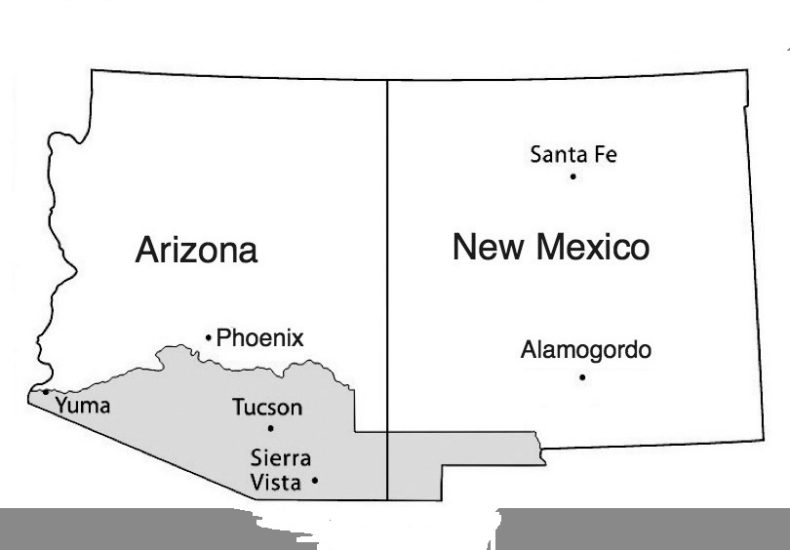
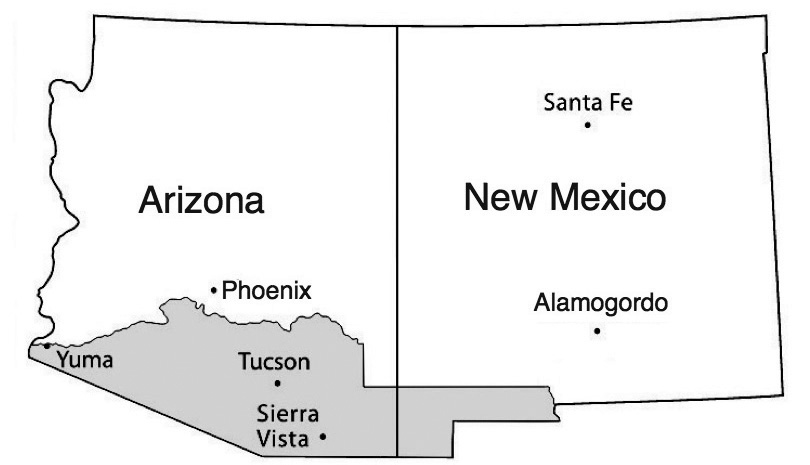
On December 30, 1853, the initial treaty was signed and sent to Washington for approval. The treaty called for paying Mexico $15 million for 38,000 square miles of land and for settlement of all claims against the US for damages to Mexicans by Indian raids. Mexico released the US from Article XI of the Treaty of Guadalupe Hidalgo and the US set aside $5 million to pay for American claims against the Mexican government.(14)
On April 25, 1854 — The United States Senate approved a revised version of the treaty. Congress
reduced the land purchased to 29,670 square miles for $10 million.(15)(16) Santa Anna accepted
this change.
June 8, 1854 — Santa Anna signed the revised treaty. After obtaining the treaty money, Santa Anna stole $700,000 for his personal use and the rest was quickly squandered or used to pay off adversaries and
allies.(17)(18)(19) The Gadsden Treaty – as it became known – went into effect on Jun 29, 1854.
In July 1855, Santa Anna attempted to obtain additional funds from the US by selling more Mexican land
to the US. Meetings were held from July 8 to August 8, when Santa Anna was overthrown. Gadsden despised Santa Anna and refused to buy more land from Mexico. Gadsden wrote Secretary of State Marcy in August 1855: “I cannot reconcile it to my judgment to negotiate with such a temporary oligarchy of plunderers.”(17)(20)
Santa Anna claimed Gadsden made it very clear that the US was going to obtain the territory they needed for a railroad “one way or another”.(21) The fact that Santa Anna wanted to sell still more land to the US proves he was not bullied by the US. Santa Anna was a very gifted liar. Mexican politicians took to vilifying the U.S. – again.
After the Gadsden Treaty was ratified, Mexican attacks escalated against American civilians in Mexico. Mexico issued orders against freedom of speech, for the surrender of arms and use of a maze of passports for travel from one location to another within Mexico.(22) Other American claims against Mexico consisted of illegal arrests and imprisonments, unlawful seizure and confiscation of goods and the expulsion from homes and land. (23)
In Dec. 1854, President Pierce informed Congress that numerous injuries by Mexico remained
unadjusted and new cases were constantly arising.(23) Mexico also encouraged Indian raids into Texas. These raids were lead by a man who had a commission in the Mexican Army.(24)
As the extent of Santa Anna’s corruption became known, he was tried in absentia for treason and found guilty. All his estates were confiscated by the Mexican government.
Later, Santa Anna declared the Gadsden Treaty a great deal: “. . . there remaining the satisfaction of having obtained for a piece of wild country, relatively what they gave for half of the national property.”(25)
Sources:
1. https://www.floridamemory.com/items/show/26225
2. Turmoil on the Rio Grande by William S. Kiser. Pub 2011, p 49
3. The Gadsden Treaty by Paul Garber. Pub 1923, p 85
4. Turmoil on the Rio Grande by William S. Kiser. Pub 2011, p 82
5. Turmoil on the Rio Grande by William S. Kiser. Pub 2011, p 84
6. The Gadsden Treaty by Paul Garber. Pub 1923, p 89
7. Turmoil on the Rio Grande by William S. Kiser. Pub 2011, p 85
8. The Gadsden Treaty by Paul Garber. Pub 1923, p 91-92
9. The Gadsden Treaty by Paul Garber. Pub 1923, p 38
10. Turmoil on the Rio Grande by William S. Kiser. Pub 2011, p 44
11. The Gadsden Treaty by Paul Garber. Pub 1923, p 32,33
12. The Gadsden Treaty by Paul Garber. Pub 1923, p 30
13. Turmoil on the Rio Grande by William S. Kiser. Pub 2011, p 43
14. The Gadsden Treaty by Paul Garber. Pub 1923, p 103,104
15. Turmoil on the Rio Grande by William S. Kiser. Pub 2011, p 85
16. The Gadsden Treaty by Paul Garber. Pub 1923, p 124,134
17. Slavery, Scandal and Steel Rails by David Devine. Pub 2004, p 81
18. Turmoil on the Rio Grande by William S. Kiser. Pub 2011, p 89,90
19. The Gadsden Treaty by Paul Garber. Pub 1923, p 155
20. The Gadsden Treaty by Paul Garber. Pub 1923, p 166-167
21. Slavery, Scandal and Steel Rails by David Devine. Pub 2004, p 53
22. The Gadsden Treaty by Paul Garber. Pub 1923, p 148
23. The Gadsden Treaty by Paul Garber. Pub 1923, p 157
24. The Gadsden Treaty by Paul Garber. Pub 1923, p 158
25. The Gadsden Treaty by Paul Garber. Pub 1923, p 139-140
March 2021
Leave a Reply