What is the ideal country we would like to live in??
This is the exact question our Founding Fathers asked. After much discussion, thought and prayer, they came up with a new form of government. The values and fundamental principles put into place made the new country of the United States of America unique in the world and caused millions of immigrants to come here because they wanted to become proud Americans and be part of the American Dream. If America were to lose these foundational principles, everything that made America, and American culture special and unique in the world will be lost.
History shows that all great nations have destroyed themselves. Countries rise, peak and then go into gradual decline. While America is still a great place to live, it is not what it should be. After over 200 years, America IS in decline. The signs are everywhere. Young people have no clue how much this country has changed because the present is all they know. A large segment of American Society, especially younger Americans, do not understand that freedom without morals will ALWAYS result in a high crime rate, borderline anarchy and unhappiness.

“…But what is government itself, but the greatest of all reflections on human nature? If men were angels, no government would be necessary. If angels were to govern men, neither external nor internal controls on government would be necessary. In framing a government which is to be administered by men over men, the great difficulty lies in this: you must first enable the government to control the governed; and in the next place oblige it to control itself. A dependence on the people is, no doubt, the primary control on the government….”
James Madison, Fourth President of the United States(1)
XXXX
XXXX
XXXXX

“You and I, my dear friend,” John Adams wrote in 1776, “have been sent into life at a time when the greatest lawgivers of antiquity would have wished to live. How few of the human race have ever enjoyed an opportunity of making an election of government . . . When! before the present epocha, had three millions of people full power and a fair opportunity to form and establish the wisest and happiest government that human wisdom can contrive?”(12)

The most intelligent group of men to ever assemble together gave the world a document that has been the blueprint
for the constitutions for other nations around the world.
Writing the Constitution of the United State

It was never assumed in the United States, that the citizen of a free country has a right to do whatever he pleases; on the contrary, more social obligations were there imposed upon him than anywhere else. No idea was ever entertained of attacking the principle or contesting the rights of society; but the exercise of its authority was divided, in order that the office might be powerful and officer insignificant, and that the community should be at once regulated and free.” (2)
Alexis De Tocqueville
When the 55 Founding Fathers gathered in Philadelphia in 1787, they recognized the shortcomings of the Articles of Confederation, which united the colonies in 1781. The task facing the Founding Fathers, true visionaries, was unprecedented in world history. The Founders recognized that an excess of power leads to despotism, while too little authority leads to anarchy, and both eventually to the ruin of the people. Throughout history, it has proven impossible to establish a lasting free society capable of staying on that thin line that separates anarchy from overpowering government.
The Founders hoped for as close to a utopian society as possible – understanding the collective good will of the citizens would determine how close we get. The people of colonial America wanted the same things nearly everybody everywhere has ever wanted – a decent, safe place to live, ability to support your family and enjoy life. The Declaration of Independence stated that people “… are endowed by their Creator with certain unalienable Rights, that among these are Life, Liberty and the Pursuit of Happiness… ”
Everything they accomplished was for YOU.
————————————————————————
Solving the two dilemmas of self government:
1) set up the government and laws to govern a free society and:
2) how to maintain social order and morality in a free society.
The Founding Fathers argued and prayed often, and in less than 4 months, wrote the finest founding document in history. Completed on September 17, 1787, the Constitution established a republic, and set forth the responsibilities of the federal government. The Constitution created a unique framework of checks and balances under which the citizenry were to work out the never ending issues that would arise as the years went by. The Founders then placed the future of the nation into the hands of voters.
—
Dilemmas of self government: 1) Laws to govern a free society
The Constitution was designed to deal with the failings of the human condition. The Founders had many fears of the excesses of human nature, notably the desire to control and accumulate ever increasing power. The Founders were well aware of the historical record on freedom. This is why the voting class was limited at first and then gradually expanded. This is why they put so many checks and balances into the system. The system was designed to bring about change slowly. The Founders wanted change to be based on reasoned thought, rather then impulse.
The Constitution established 3 separate branches of government, the executive, legislative and judicial. Each branch of government was to be a counterbalance against the other two and keep one branch of government from becoming too powerful. The legislative and executive are subject to the will of the people through elections. Until 1913, each state’s legislature appointed Senators. The judiciary would not be subject to elections in the hope that they would interpret the Constitution impartially and be free from political pressure.
The creation of the Senate was the result of a compromise made at the Constitutional Convention to satisfy the small population states who feared the populus states would run the country for themselves and the smaller population states would have no say. To solve this dilemma, the House of Representative was based on population, while there would be two Senators from each state regardless of population. This way there had to be consensus between large population states and small population states when legislation was passed in Congress. For these same reasons, the Electoral College is used to determine who wins the Presidency, instead of the popular vote.
The Founders strongly believed that government should be ruled by laws and not by men. The Founders considered a Republic a much more stable form of government because a democracy is essentially mob rule. In a Republic, government power is designed to protect the rights of individuals and keep the majority from abusing the minority.
In all countries, there is a line between individual beliefs and laws that everyone is expected to follow. The Founders gave Americans more individual freedom then any other nation in the world, so we could all live our lives as we see fit. However, in areas where there needs to be established governmental policy, the Founders wanted majority rule within the Constitutional framework. Agreeing to disagree is essential in a free society.
—
Dilemmas of self government: 2) Maintaining social order and morality in a free society.
While the Constitution dealt primarily with the actual structure of the new American republic, the best system in the world will only work as good as the collective goodwill of the people. The Founders knew that freedom is a double edged sword. It can be incredibly fulfilling or unbelievably destructive – individually and as a nation. A moral, law abiding society comes first, freedom comes as a result. FREEDOM AND MORALITY ARE CO-DEPENDENT AND INSEPARABLE. It is impossible to have a functional free society where a significant percentage of society is lawless. Freedom without morality produces anarchy.
On what ideals would the citizens determine right and wrong? The Founders strongly believed that the moral code, self discipline and work ethic of the Christian Faith was vital for the Republic to endure and should be promoted by the government. The Founders wanted Christian beliefs to be the basis for law and morality in America. The Founders put the burden of maintaining a civil society on the people. Since the average person would have the most to lose if morals and social order broke down, it would be in the peoples self interest to maintain a moral society by voting candidates with strong moral values into Congress and state legislatures.
The Founding Fathers opposed establishing a theocracy or an official government sponsored religion like most other countries at the time. The Founders knew that it was not only counterproductive, but dangerous to establish a state religion. The Founders were confident that Christianity would endure throughout society on its own merits as the true religion of God and the superiority of its social values over all other religions.
Even people who were not Christian would feel comfortable living under the stability of Christian social values and its most important doctrine – do unto others as you would have them do unto you. It was universally accepted that laws could be passed based solely on morality and the need to maintain a stable, safe society.
The American experiment in freedom succeeded due to the Constitution and the ethics of Christianity. Free societies lose their freedoms when they lose their ethics and morals. Then more and more laws must be passed to keep society functioning. The State becomes increasingly powerful in a nation of increasing lawlessness.
15 Foundational principles for the United States
The Foundations for the United States of America were revolutionary new ideas in the 1700s. Although many of these ideals are common in many countries around the world today, understanding why these ideas are so essential is the great challenge from one generation to the next in America. America was the first country where power went from the people up to the government.

Thomas Paine
1) Morality – A free society cannot exist without the people voluntarily living under the moral code of Christianity. Self-adherence to the morals of Christianity is the most important aspect of maintaining a safe society and eliminates the need for extensive police presence and lots of laws designed to control people. When people respect other people and their property, our society functions wonderfully and peacefully. Ghettos are a creation of people with no morals and churches that are ineffective.
2) Importance of the individual – In no other country does a founding document declare that the individual gets his rights and importance from God. In other countries “the masses” were merely a tool of state policy. In no other country was personal development and education encouraged like it was in the US.
3) Personal Freedom and Responsibility – Freedom can be incredibly fulfilling and rewarding or incredibly destructive. In a free country, your choices determine your fate. That’s what freedom is all about. You are free to succeed or fail. There were no welfare bums living off the taxpayer in colonial society. Americans were raised on responsibility and self reliance. If you were struck by unfortunate circumstances, you were helped by family, friends, the church, charitable or fraternal organizations and later, private insurance companies.
4) Rule of Law – In America the Constitution rules. American society rests on the Rule of Law, NOT the Rule of Men. The Rule of Law means no one is above the law. Police, politicians, business tycoons, celebrities are subject to the same laws as everyone else. This is a utopian concept and America has failed on occasions. Yet all things considered, America has done very well at applying this concept. To understand a society run by the Rule of Men, examine the history of Mexico from its independence in 1821 to the present.

5) Separation of Powers – The greatest fear of the Founders was the disposition of power and its tendency to expand beyond legitimate boundaries. Power, it was said over and over again, has “an encroaching nature”; “. . . if at first it meets with no control [it] creeps by degrees and quick subdues the whole.”(8) The Founders believed that what lay behind every political issue was the human lust for power and control.
The Three branches of the Federal Government were essential to provide checks and balances against each other. When one of these branches becomes too dominant, there are dire consequences to the Rule of Law and Representative government.
Separation of powers was also considered all important between Federal, state and local governing bodies. Since the massive expansion of the federal bureaucracy from the 1960’s onward, state and local governments have lost much of their independence.
6) Voting – The voters elect the President through the Electoral College and the House of Representatives through direct popular vote. Voting was initially limited to white males who were property owners and the Founders have been criticized for this. However, the Founders were very concerned about voters being educated enough to vote responsible people into office. Even with this property requirement, 50 to 85 percent of white males were eligible to vote, depending on the state.(9) As the American experiment in self rule has progressed, voting in America is a story of ever increasing voting rights.
In third world countries, change is brought about by guns. In America, change comes through the ballot box. If voter fraud ever compromises the integrity of the voting system, people will lose faith in the political process which could result in political violence like third world countries. The integrity of the voting system MUST be maintained.
7) Education was considered absolutely vital. No country in history stressed education for all like the US did. Dictators don’t want a lot of educated people around to challenge their authority. In America, an educated population was critical in a nation where voters decided who runs the country. Education was essential for individual growth and well-being as well as economic growth for the nation and raising up the next generation of leaders.

John Adams, second
president of the U.S.
8) Freedom of Speech – The US was the first country were people could express any view they wanted. While there is the occasional desire to restrict what many would consider ‘hate speech,’ this is a very dangerous path to embark on – and would ultimately destroy our free speech rights. Everyone has a Constitutional right to peaceably assemble and express their opinion – even if it a hate group. It MUST be left to society to refute speech that is considered hateful or offensive – not the government. It is the proudest boast of our First Amendment that we protect the freedom to express what we dislike. While ‘hate’ speech is protected, threatening physical violence against others is NOT protected.
9) Freedom of the Press – The US was the first country with a totally free press. Anyone could print up anything they wanted or start a newspaper. In other countries, licenses and fees were used to control who was allowed to go into business and what information was printed. In many countries, there was no freedom of speech or of the press. The first thing any dictator does is take control of the media. As an example, Venezuela’s late fascist leader Hugo Chavez used alleged violation of government regulations to take EVERY radio and TV station that had programing opposing Chavez taken off the air waves. It is much safer for freedom of speech for the market place of ideas to decide what is broadcast. It you don’t like the programing on a station, change the station.
10) The right to keep and bear Arms – the second thing any dictator does is to disarm the people – after first taking control of the media. The Founding Fathers recognized this.
11) Religious Freedom – The government was prohibited from establishing a state religion that everybody was expected to belong to. You could be any religion or no religion. Since Christian values were considered all important in maintaining morality, views could be expressed in any setting – private, or governmental. (Liberals who oppose free speech have effectively outlawed portions of the First Amendment)
12) Economic Freedom – Economic freedom and political freedom go hand in hand. Free enterprise uses the natural tendencies of human nature for the betterment of society by rewarding work. The British colonial system of mercantilism was designed to keep the colonies dependent on Britain. The Founding Fathers knew that socialism was a failure as it destroys individual initiative and compromises freedom. The American Republic became a unique experiment in free enterprise and unprecedented open markets.
13) Private Property – Most people today don’t understand the absolute importance of private property rights. Private property is essential for prosperity and maintenance of liberty. Owning things is the natural reward for work. Historically, when the state takes control of private property, it has resulted in dire consequences for justice and economic prosperity. If the state owns everything, they own you and the work ethic dies. Revolutions occur in countries where the people don’t own much and have little to lose by revolting.
14) Trial by Jury and Due Process – a jury of peers will decide guilt or innocence, not a government bureaucrat, which was common in many countries of the day. No one can be arrested or held in prison without being charged. In other countries, people would be taken away by authorities and held indefinitely without ever being charged with a crime.
15) English Language – Though the Constitution does not spell it out, it was understood from the beginning that there had to be a common language, which was English. This is why the Founders adopted the motto “E Pluribus Unum” in 1782 – “Out of many, one,” For the first 200 years, immigrants learned English and assimilated into American society. It has only been in modern times that the government has foolishly catered to non-English speaking immigrants in their native language.
Accomplishments of our Founding Fathers
The American Constitution accomplished goals that had proven impossible for earlier generations anywhere in the world to figure out. Lord Acton of England, who once said, “Power corrupts, and absolute power corrupts absolutely,” would say of the writers of the American Constitution, “They had solved with astonishing ease and unduplicated success two problems which had heretofore baffled the capacity of the most enlightened nations. They had contrived a system of federal government which prodigiously increased national power and yet respected local liberties and authorities, and they had founded it on a principle of equality without surrendering the securities of property or freedom.” Never in any society had the importance of the individual been so firmly established and given such a priority.
America was the first country in history to be founded on a set of ideals, rather than race, ethnic makeup or religion. But to say that America is merely an ideological country would not be accurate. By the time of the Revolutionary War in 1776, the 2.5 million people of colonial America had developed a distinctly American culture, based largely on Biblical beliefs. While the ideals set forth in the Constitution were revolutionary for the rest of the world, for most Americans, it was a logical progression of governance for the new nation.
Americans enjoyed unprecedented freedoms that no other society on Earth had at that time. The American Revolution was unique in world history for its goodness. The form of government set up by our Founding Fathers was the best form of government ever devised and changed the whole world for the better. In the 1770’s, in virtually every country in the world at that time, you had a ruling elite which imposed laws on everyone else at their whim. (like today’s leftist federal judges)
It has been pointed out endlessly that colonial America had social flaws – principally slavery. Slavery was not an American invention. It was common all over the world at the time. Black Africans, American Indians, Muslims and a host of other cultures openly traded and owned slaves. We need to remember that there never was an anti-slavery movement until white Christians – Englishmen and Americans – created one. The critical importance of our founding document is that it gave a moral legal basis to the eventual eradication of slavery, not only in America but around the world.
Today’s ‘civil rights’ activists dismiss any of the Founders of America if they owned slaves – as if nothing they said or did was of any value. This is total ignorance. The Founders were brilliant men – but not perfect men. To condemn the Founding Fathers for having tolerated a society that allowed slavery was to expect far more from them then they were able to attain at that time period – when the abolitionist movement was in its infancy. These critics would not have a clue how to write a Constitution for a free society.
Writing the Constitution, Bill of Rights and establishing a Republic was an unrivaled accomplishment in world history – and the Founders should be honored for this. Because some Founders owned slaves does not negate the brilliance of what these men accomplished.
The Founding Fathers banned slavery in the Northwest Territory in 1787. Congress abolished the importation of slaves into the US in 1807 – as did Great Britain. The trade of African slaves to Brazil and Cuba continued until the 1860s. Slavery was primarily used in agriculture and no one knew how to survive economically unless all slavery was
abolished at the same time.
The Founding Fathers set in motion social action by Christians who made slavery morally reprehensible in all of America and around the world. This is one of many ways America shaped the world for the better.
America is a unique gift to the world.
Comparing the American revolution with other revolutions

In 1926, America celebrated the 150th anniversary of its Declaration of Independence. On this occasion, citizens of Poland, almost a sixth of the population or more than 5.5 million people, signed a unique birthday card, The Polish Declarations of Admiration and Friendship.
“We, the people of Poland, send to you, citizens of the Great American Union, fraternal greetings, together with the assurance of our deepest admiration and esteem for the institutions which have been created by you.”
“In them liberty, equality and justice have found their highest expression and have become the guiding stars for all modern democracies.”(11)
————————————————————————-
Compare the results of the American revolution with virtually every other revolution in history. In America, one group over threw another in order to promote freedom for all, and just as importantly, was able to maintain this freedom. The leaders of the American revolution sacrificed their all for the revolution to succeed. In no other nation in history, did a group of men so selflessly sacrifice everything for the greater good than did our Founding Fathers.
In other revolutions, one group overthrew another and then imposed their own brand of tyranny on the loser and the rest of the population – all the while proclaiming they were “For The People.” Just a few examples of this type of tyranny would be the Communist revolution of 1917 in Russia, the Communist takeover of China by evil Mao Tse Tung in 1949, The Communist takeover of North Vietnam under dictator Ho chi Minh in 1954, Communist Fidel Castro in Cuba in 1959, Saddam Hussein in Iraq, the Iranian revolution in 1979, the takeover in Cambodia by the Khmer Rouge in 1975 that resulted in one million people being exterminated. In other revolutions, a civil war resulted. The French revolution of the 1790s, an attempt to duplicate the American Revolution, turned into a bloodbath.
Mexico was another country that attempted to duplicate the American Revolution. But after Mexico defeated Spain to gain their independence in 1821, the country was wracked by dozens of civil wars and revolutions that lasted well into the 20th century. After the collapse of the Soviet Union and communism in the early 1990s, Russians enjoyed a taste of freedom and capitalism, but lack of ethics and the failure of the rule of law has spoiled the experiment in freedom and Russia is returning to a totalitarian state.
There are numerous reasons why revolutions have failed in other societies. A failure of ethics throughout society is the most important. The failure to separate church and state is another. The failure to write a good founding constitution and the failure to abide by the founding documents are other reasons.
Threats to the American way of Life
There is no guarantee that America will be a nice place to live in in 50 years. There is no guarantee that America will be a free country in 50 years. It is seldom realized that citizens in a free society must be more educated, thoughtful and moral than in a dictatorship. In a dictatorship, people don’t need to think, just blindly follow. A free country requires voters that are educated and moral enough to vote good people into office.
America has serious issues that could lead to the demise of our country:

- The decline in morals and ethics giving us a high crime rate and unsafe neighborhoods.
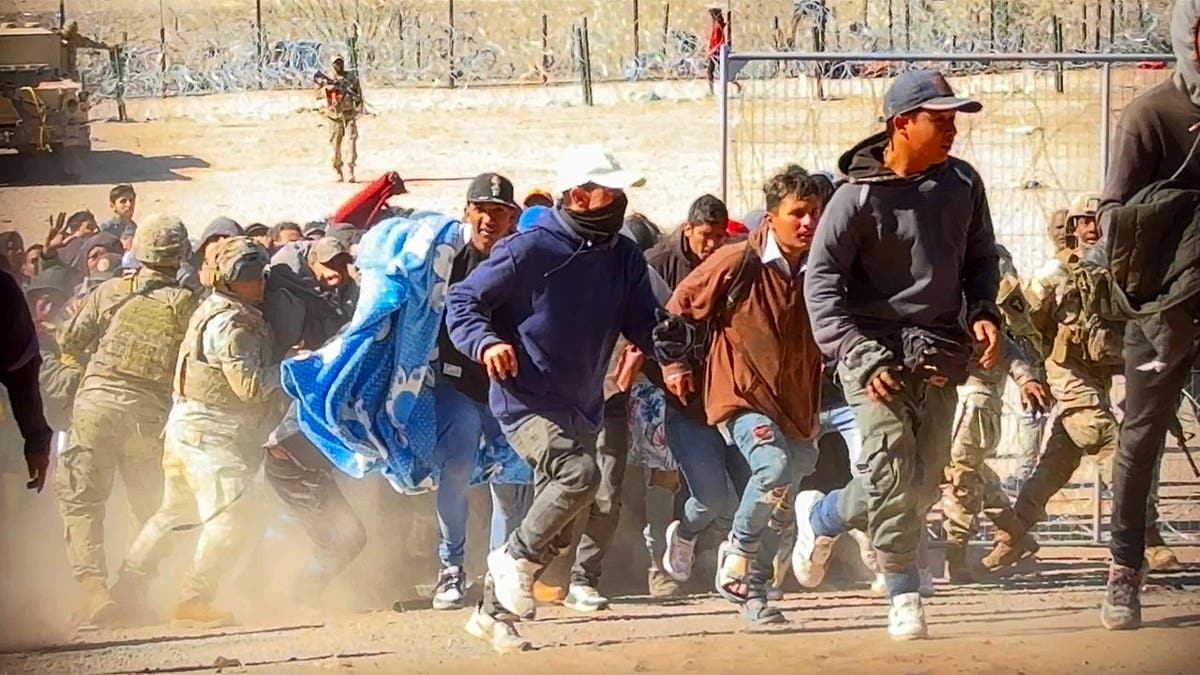
- Refusal by democrats to secure our borders from people illegally entering our country.
- Massive deficit spending by the federal government that has given us over $36 trillion national debt.
- Destroying national unity by separating Americans by race, gender and ethnicity (DEI-quotas)
- Public education has often become indoctrination centers for the political left.
- The desire by Moslems living in the US to establish a theocracy based on Sharia Law is another threat to the Rule of Law and our Constitutional rights.
- Would Americans defend our country in war? During World War Two, 99% of America’s men willingly went off to war, with 300,000 being killed in action. Today, would 99% of our men go off to war to defend America?
The First Amendment to the Constitution of the United States:
Congress shall make no law respecting an establishment of religion, or prohibiting the free exercise thereof; or abridging the freedom of speech, or of the press; or the right of the people peaceably to assemble, and to petition the Government for a redress of grievances.
Sources:
- The Federalist Papers Number 51 (http://www.constitution.org/fed/federa51.htm)
- Democracy in America, by Alexis De Tocqueville, published in 1835
- John Adams, The Works of John Adams, Second President of the United States, Charles Francis Adams, editor (Boston: Little, Brown, and Co. 1854), Vol. IX, p. 229, October 11, 1798.)
- Letter to Colonel Carrington (27 May 1788) https://founders.archives.gov/documents/Jefferson/01-13-02-0120
- Common Sense, published in 1776
- Unholy Spirits by Gary North. pub. 1986, Dominion Press. p. 158
- President Ronald Reagan, in an address to the annual meeting of the Phoenix Chamber of Commerce, (30 March 1961)
- The Ideological Origins of the American Revolution by Bernard Bailyn, p56
- University of Chicago Law Review, 3-1-1957, Review of CharlesBeardandtheConstitutionby Robert E. Brown, p596 http://chicagounbound.uchicago.edu/cgi/viewcontent.cgi?article=3030&context=uclrev
- http://founders.archives.gov/documents/Washington/05-06-02-0135
- https://www.poloniainstitute.net/news/polands-1926-celebration-of-american-independence/
- The Ideological Origins of the American Revolution by Bernard Bailyn, p 273
Other Sources:
Novus Ordo Seclorum, The Intellectual Origins of the Constitution by Forrest McDonald, University Press of Kansas (1985)
The United States Constitution
The 5000 Year Leap by W. Cleon Skousen, published by the National Center for Constitutional Studies, 1981 First Principles: Self-Governance In An Open Society, Black Sheep Farm Press (2008)
February 2019